Breakfast in Montréal, and we wanted good smoked meat. We had heard, like most Canadians, of Shwartz's reputation. However, on-line reviews warn of hour-long line-ups and of the effect that a reliable stream of tourists (like us) has had on the quality of the food.
Main Deli And Steak House across the street seems to be where the locals are going instead, and that is where we headed.
 Smoked meat, eggs and grilled latkes.
 These latkes weren't much to look at, but the density is something to be respected, like the beginnings of a black hole. Smokey from the grill, they are absolutely incredible.
 The smoked meat pushed all the right buttons; salty, fibrous, soft, juicy, peppery... On the last day we rushed back to Main Deli before heading to the airport to grab some sandwiches for the plane ride home. We would have got latkes, too, but they probably would have put us over our weight limit.
 Montréal has got the old European sense of making coffee; if it came out of the espresso machine and has milk and foam, it must be a cappuccino, so tais-toi and drink it. Perhaps the cigarettes have dulled everyone's taste buds.
Never mind the coffee, though, the croissants are, more often than not, out of this world. Crisp and flaky while the interior is still a soft spiral of buttery feathers. These two chains of bakeries make excellent croissants at surprisingly reasonable prices: Au Pain Doré and Juliette Et Chocolat.
 Even a cafeteria-style spot in La Marché Jean-Talon produced a delicious lunch, like this gratin of asparagus wrapped in ham. The tourtière was delicious, too, although oddly (?) served upside down.
 Rotisserie Romados
makes, without a doubt, the best rotisserie chicken we have ever had. A
long, but rapidly moving line-up showed that many Montréalers feel the same.
Rotisserie Romados
makes, without a doubt, the best rotisserie chicken we have ever had. A
long, but rapidly moving line-up showed that many Montréalers feel the same.
 Forty chickens on the grill at once, and the warming trays are kept full. This is a busy shop.
 Just down the street is Patati Patata. We found them on a blog devoted to Montréal poutine. Run by a young, hard-working couple, this place is busy because they get it just right; proper proportions of crisp fries layered with hot gravy and half-melted cheese curds.
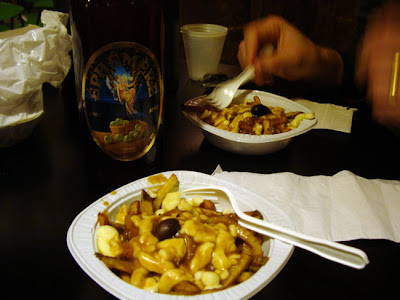

 We dragged our haul of roast chicken and poutine back to the hotel where we devoured it all with cold bottles of Ephémère apple. One of the best travel meals ever.
 We liked the logo and the brew-pub-like feel of this local chain, but something had gone a bit off the rails.
 The menu strikes a good balance of local/popular and their in-house brand beer is available in six varieties, but something is missing. The onion, bacon and raclette pizza was very good, with a thin crispy
crust, but everything else seemed to be reconstructed by looking at
photos of something much better. The beers looked great but lacked any distinctive flavour, and even we west coasters knew enough to be embarrassed by the poutine: pale, powdery fries, thin gravy and still-cold bits of cheese (not curds). It's like a corporate accountant has gone through every item, making cost-effective replacements everywhere at the expense of flavour and character. "Ersatz" was the word that kept coming to mind. Too bad.
The menu strikes a good balance of local/popular and their in-house brand beer is available in six varieties, but something is missing. The onion, bacon and raclette pizza was very good, with a thin crispy
crust, but everything else seemed to be reconstructed by looking at
photos of something much better. The beers looked great but lacked any distinctive flavour, and even we west coasters knew enough to be embarrassed by the poutine: pale, powdery fries, thin gravy and still-cold bits of cheese (not curds). It's like a corporate accountant has gone through every item, making cost-effective replacements everywhere at the expense of flavour and character. "Ersatz" was the word that kept coming to mind. Too bad.
Main Deli And Steak House across the street seems to be where the locals are going instead, and that is where we headed.


Never mind the coffee, though, the croissants are, more often than not, out of this world. Crisp and flaky while the interior is still a soft spiral of buttery feathers. These two chains of bakeries make excellent croissants at surprisingly reasonable prices: Au Pain Doré and Juliette Et Chocolat.


